
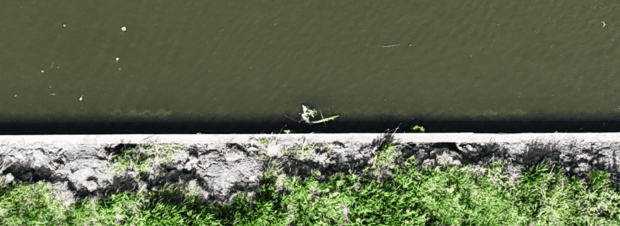
Underwater sheet piling: protection below the waterline
Underwater sheet piling is an essential part of Dutch infrastructure to address the challenges of water management. Through continuous innovation and adaptation to changing environmental conditions, the Netherlands remains a leading example in effective water management.
Sheet piling protects banks from erosion and provides stability to the watersides of rivers, canals and ponds. Various materials are used for underwater sheet piling including wood, steel, concrete and PVC. Each material has its own advantages and applications depending on the specific requirements from the project and the environment.
Functions
- Erosion prevention: Underwater sheet piling protects banks from erosion caused by flowing water and waves. This helps to maintain the integrity of banks and levees.
- Stability: These structures provide stability to banks and prevent soil and sediment from washing away, which can cause bank collaption.
- Ecological protection: By minimizing erosion, underwater sheet piling helps maintain natural habitats and biodiversity in and around water bodies.
- Water quality management: By stabilizing banks, underwater sheet piling also helps control sediment movement and thus contributes to maintaining water quality.
Most commonly used materials
- Wood: Widely used because of its relatively low cost. Under water, the posts do not come into contact with oxygen so they will not rot. Nevertheless, the lifespan of wood can be limited due to infestation by aquatic organisms. In addition, a wooden structure remains sensitive to situations with fluctuating water levels.
- Steel and concrete: These materials offer a very long lifespan and are very strong. The disadvantage is that these materials are often expensive and more difficult to install. In addition, these materials tend to damage the environment. Steel sheet piles are often used in situations involving high loads and great depths.
- PVC: Increasingly, PVC is being used because of its unique properties. PVC has a long lifespan, is maintenance free and offers a quick and easy installation compared to wood and steel.
Underwater sheet piling is increasingly used in the creation of natural shorelines. Its use in this context helps control erosion while maintaining or restoring the ecological integrity and natural appearance of the shoreline.
What can Prolock offer in the area of underwater sheet piling and bank stabilization?
Prolock Aqua is increasingly being used for underwater sheet piling. Because the screens are completely submerged, they do not require a UV-resistant coating and therefore consist of 100% recycled PVC. This makes Prolock Aqua a cost-effective and environmentally friendly alternative to traditional materials.
Prolock @ Verboon Maasland
Last month we realized a beautiful project in collaboration with Verboon Maasland B.V.
Prolock Aqua as an alternative to traditional wood →